 Falafel in Hotpot
Learn • Issue 13
Three sentences that taught China Chinese
Before Duolingo, there was 毛选. For decades, Chinese language classes — inside China and out — leaned on Selected Works of Mao Zedong for one simple reason: the sentences are short, the grammar is clean, and the rhythm sticks.
Before Duolingo, there was 毛选.
For decades, Chinese language classes — inside China and out — leaned on 毛选 (Máoxuǎn), Selected Works of Mao Zedong, for one simple reason: the sentences are short, the grammar is clean, and the rhythm sticks in your memory. You don’t have to agree with the politics to notice the pattern-teaching is genuinely good.
Here are three lines almost every Chinese learner eventually meets — and the grammar hiding inside each one.
Sentence one
Grammar point — 可以 (kěyǐ): possibility / capability. Small subject, big verb, no fuss.
Sentence two
Grammar point — a four-character set phrase (成语): two verb-object pairs stacked back to back. This exact structure shows up constantly in formal and business Chinese.
Sentence three
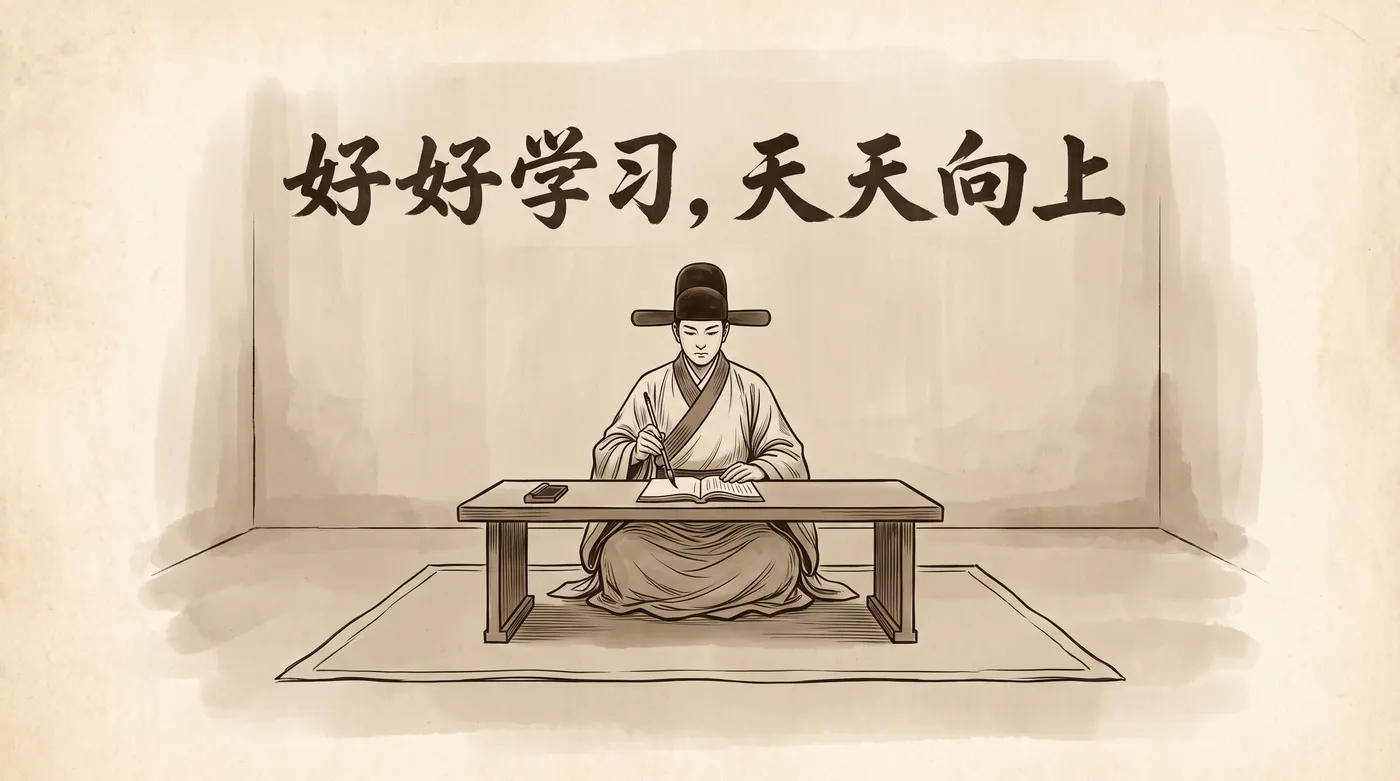
Grammar point — reduplication: 好好 and 天天, doubling a word to mean “thoroughly” or “every single day.” One of the first patterns you’ll actually use in daily speech.
These three sentences took you sixty seconds. Understanding why they’re built that way — and being able to build your own — is exactly what we do, lesson by lesson.