 Falafel in Hotpot
Learn • Issue 14
How to actually say "Happy Birthday" in Chinese
On 生日快乐 and the handful of phrases that make it sound like you mean it — six phrases for the next birthday you're at.
On 生日快乐 and the handful of phrases that make it sound like you mean it.
Six phrases for the next birthday you’re at
生日快乐 is correct, safe, and understood everywhere. But it’s also what every textbook learner reaches for. Here are six phrases that’ll actually make you sound like you know what you’re saying.
Phrase one · The basic
The universal, safe-for-anyone version. 生日 (shēngrì) means “birthday,” 快乐 (kuàilè) means “happy.” Works in any setting, formal or casual.
Phrase two · The complete sentence
祝 (zhù) means “to wish” — this is the actual verb-based sentence version, not just the short phrase. Slightly warmer and more complete than Phrase One. This is also the line inside the Chinese “Happy Birthday” song itself.
Phrase three · For elders & milestones
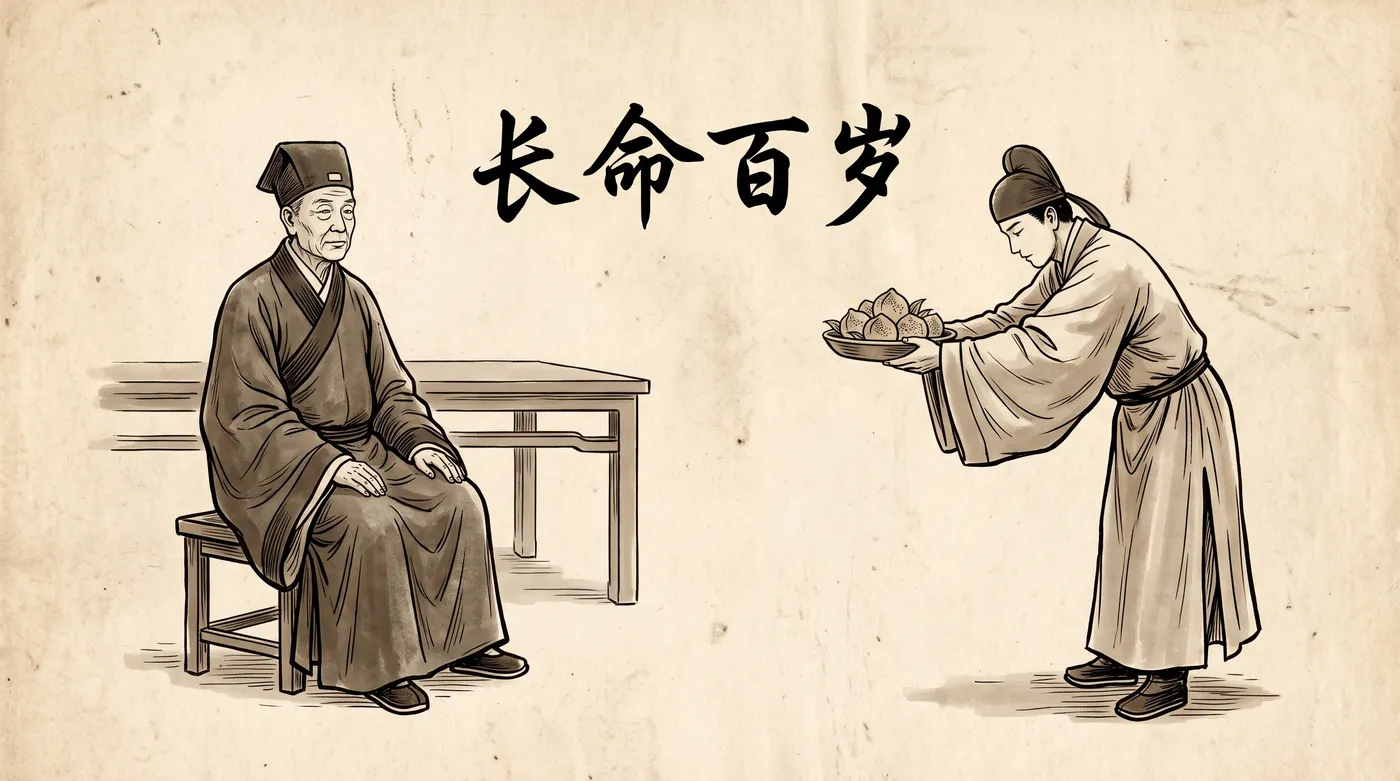
A traditional longevity wish, reserved for older relatives or milestone birthdays — 60th, 70th, 80th. In Chinese tradition, the milestone birthdays are the ones that actually matter.
Phrase four · The wish-maker
Said right after someone blows out the candles — the Chinese equivalent of “I hope your wish comes true.” Literally: “heart thinks, thing becomes.”
Phrase five · The all-purpose blessing
Not birthday-specific — this is a general good-fortune wish used at New Year, weddings, and birthdays alike. Pairing it after 生日快乐 is common and sounds noticeably more fluent than the phrase alone.
Phrase six · The playful compliment
A common, affectionate birthday compliment — 漂亮 (piàoliang) for a woman, 帅 (shuài) for a man. The 越来越 (yuè lái yuè) structure means “more and more” — a genuinely useful pattern beyond just birthdays.
祝你天天开心 — wishing you happiness, every day, not just the birthdays.