 Falafel in Hotpot
Bridge • Issue 15
The man who writes Arabic with a Chinese brush
One man ignored both rules. His entire life's work is the thing this newsletter keeps trying to describe — except he does it with ink instead of words.
الرجل الذي يكتب العربية بفرشاة صينية.
Arabic script is always horizontal. Chinese script is always vertical.
One man ignored both rules.
I want to introduce you to someone whose entire life’s work is the thing I keep trying to describe in this newsletter, except he does it with ink instead of words.
His name is Haji Noor Deen Mi Guangjiang. He was born in 1963 into a Hui Muslim family in Shandong, China — the same community behind Xiao’erjing, the Arabic-script Chinese I wrote about a few issues ago. As a teenager, he fell in love with Arabic calligraphy. As an adult, he got on a plane to Egypt and spent close to a decade training there, the traditional way, under master calligraphers.
In 1997, he became the first Chinese person ever awarded the Certificate of Arabic Calligrapher by the Egyptian Calligraphy Association. In 2017, after further study under Ottoman master Hasan Celebi in Istanbul, he became the first Chinese person awarded an Ijazah — a formal calligraphy license — in Ottoman Thuluth and Naskh script.
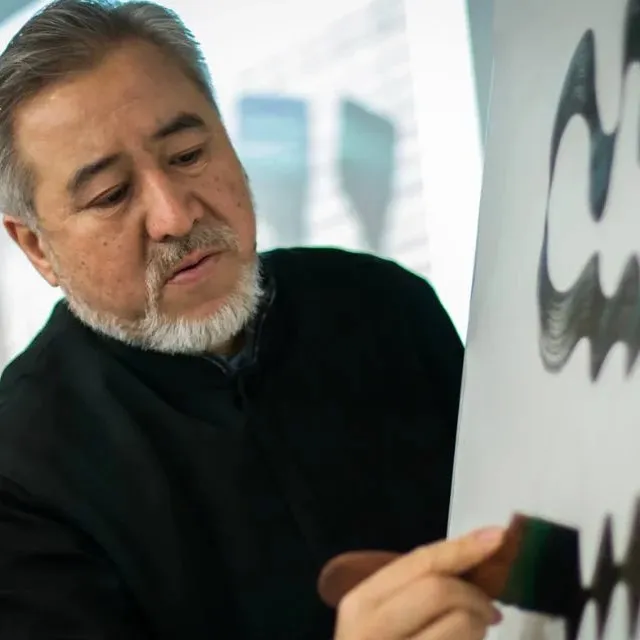
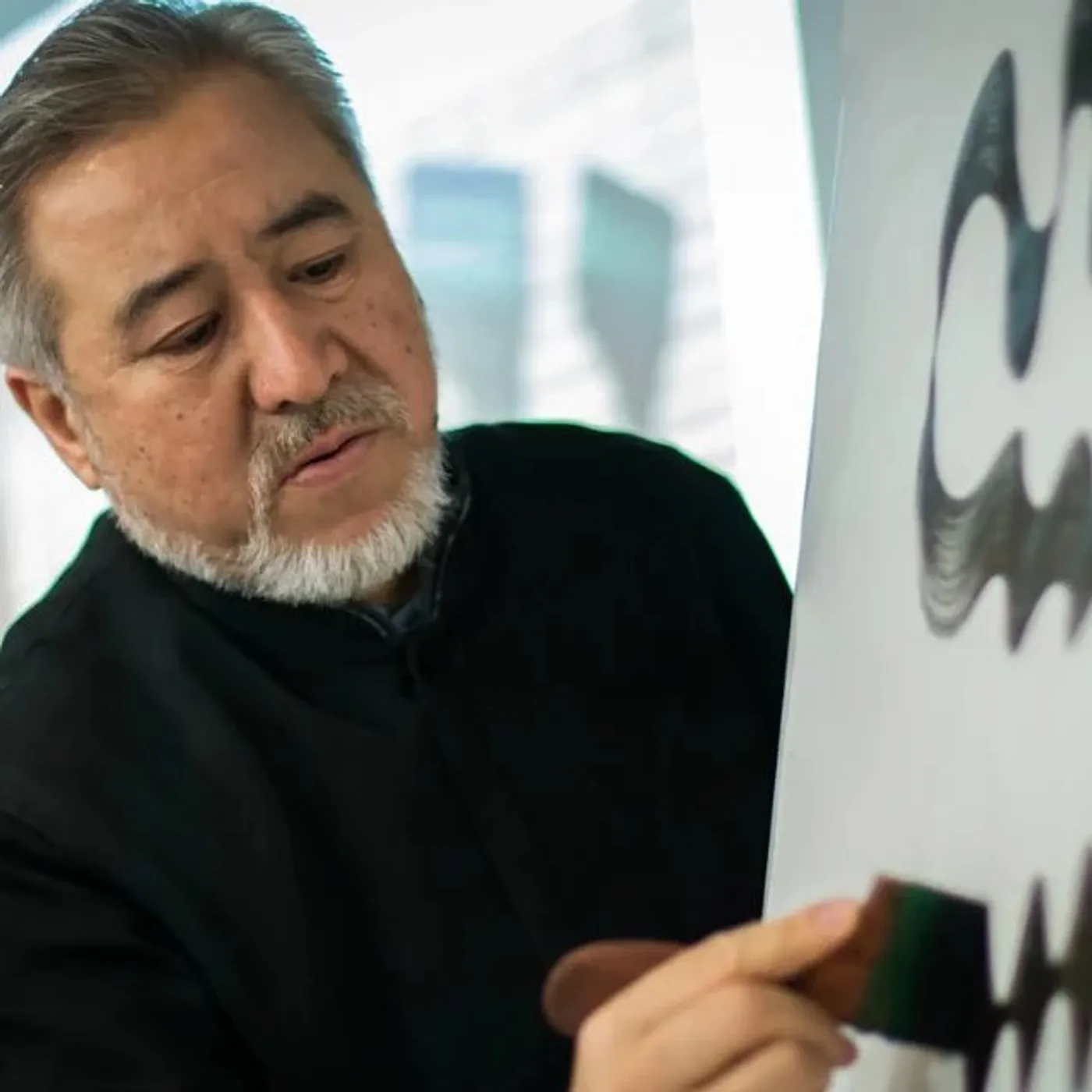
But the part of his story I actually want to tell you about isn’t the credentials. It’s what he does with a brush.
A script with no name until someone needed one
Haji Noor Deen works primarily in something called Sini — a centuries-old style of Arabic calligraphy, developed by Hui Muslim artists going back to the Yuan and Ming dynasties, that does something no other Arabic calligraphy tradition does: it borrows Chinese tools and Chinese instincts, and points them at Arabic letters.
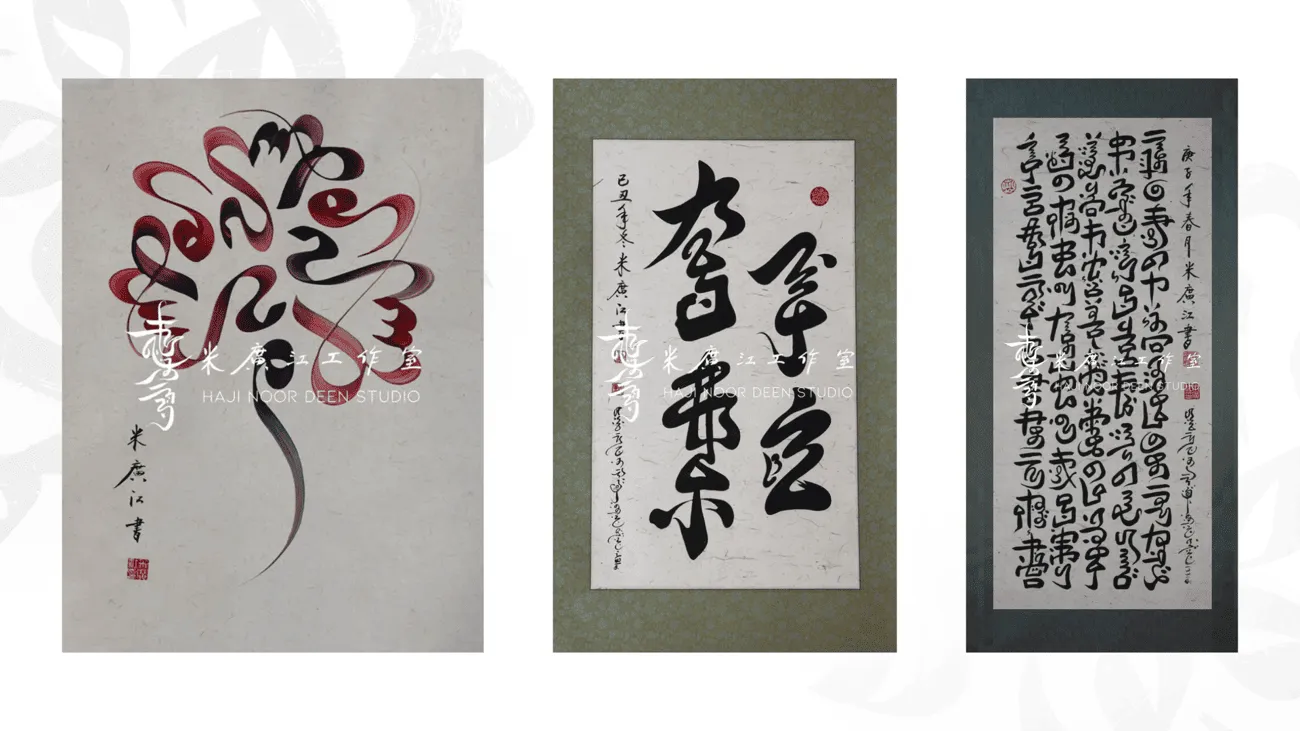
Traditional Arabic calligraphy is written with a reed pen, and the stroke tapers gradually, evenly. Sini calligraphy is written with a Chinese brush, on rice paper, in ink — and the stroke behaves like Chinese calligraphy: thick, then suddenly thin, curling into a fine point the way a Chinese character does. Arabic letters, moving like Chinese ones.
Two scripts, two instincts
Traditional Arabic calligraphy: horizontal, reed pen, gradual even tapering.
Sini calligraphy: Arabic letters, Chinese brush, ink strokes that thicken and taper the way 汉字 do.
Haji Noor Deen didn’t invent Sini — it already existed, quietly, in mosques across Gansu, Ningxia, and Shaanxi for centuries. What he did was take a folk tradition and elevate it into fine art taken seriously by the biggest museums and universities in the world.
One phrase, holding two civilizations at once
One of his most quietly powerful pieces is a rendering of the Basmala — بسم الله الرحمن الرحيم, “In the name of God, the Most Gracious, the Most Merciful” — the phrase that opens nearly every chapter of the Quran, and one of the most recognizable phrases in the Muslim world.
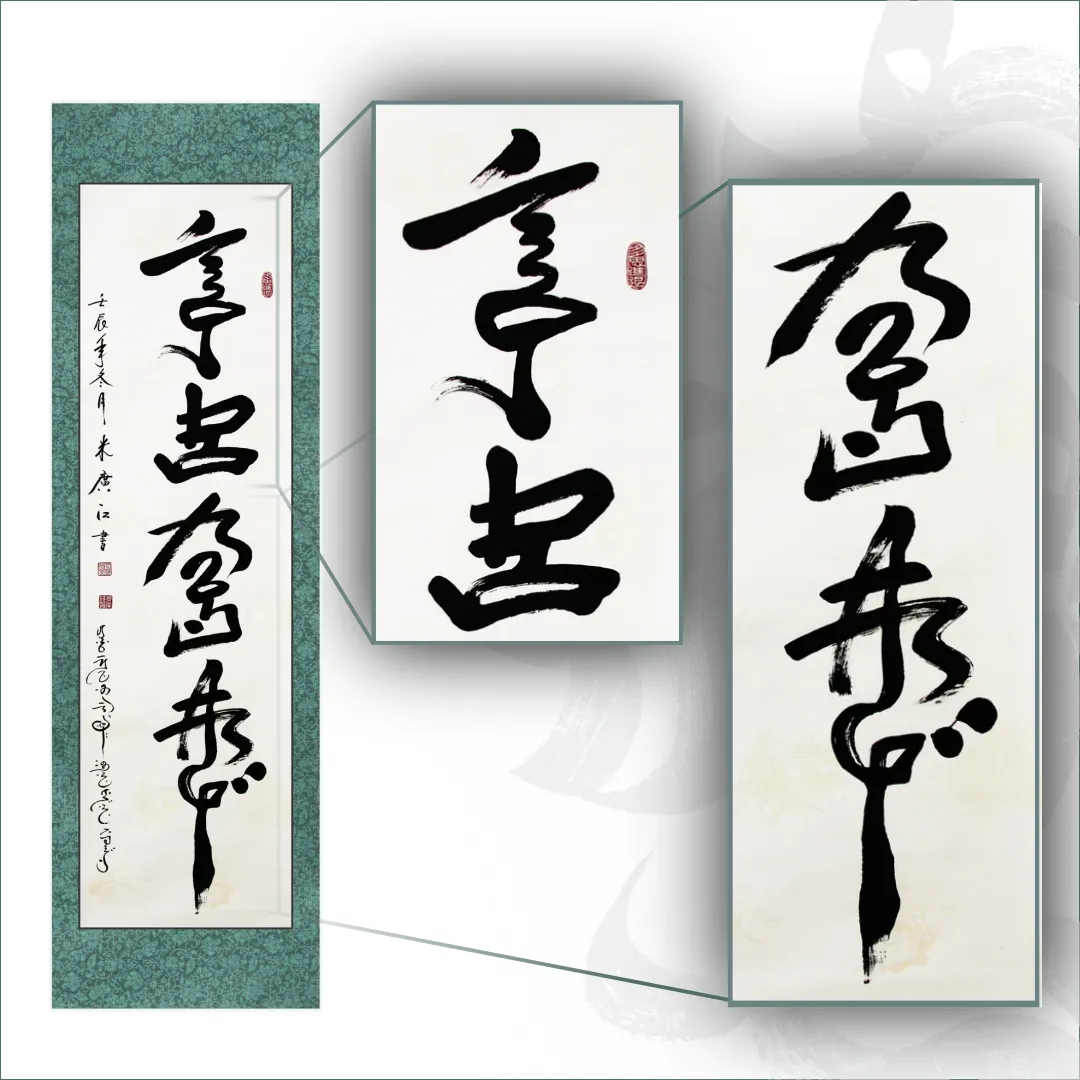
Written in Sini, on rice paper, with a Chinese brush. The words are entirely Arabic. The hand that moves is entirely Chinese. You cannot separate the two halves of that sentence — the piece only exists because both traditions are fully present in it at once.
1963 — Born in Yucheng, Shandong, into a Hui Muslim family.
1997 — First Chinese person awarded the Certificate of Arabic Calligrapher, Egypt.
2005 — His piece “The Ninety-Nine Names of God” is acquired by the British Museum.
2009 — Founds the Chinese House for the Arts of Islamic Arabic Calligraphy, in Zhengzhou.
2017 — Becomes the first Chinese person awarded an Ijazah in Ottoman calligraphy, Istanbul.