 Falafel in Hotpot
Bridge • Issue 16
The same wood, burned for two opposite reasons
China burns agarwood to disappear into thought; Arabia burns it to welcome you into the room. One precious tree resin — completely opposite rituals.
نفس الخشب، يُحرق لسببين متضادين.
Two civilizations. One precious tree resin.
Completely opposite rituals.
There’s a resin called agarwood — formed when a tree gets wounded and seals the injury with dense, fragrant resin over decades. In China it’s called 沉香 (chénxiāng), “sinking fragrance.” In Arabic, the same material is called oud. Both civilizations independently decided it was the most precious incense material in the world. And then they did almost opposite things with it.
China: incense as solitude
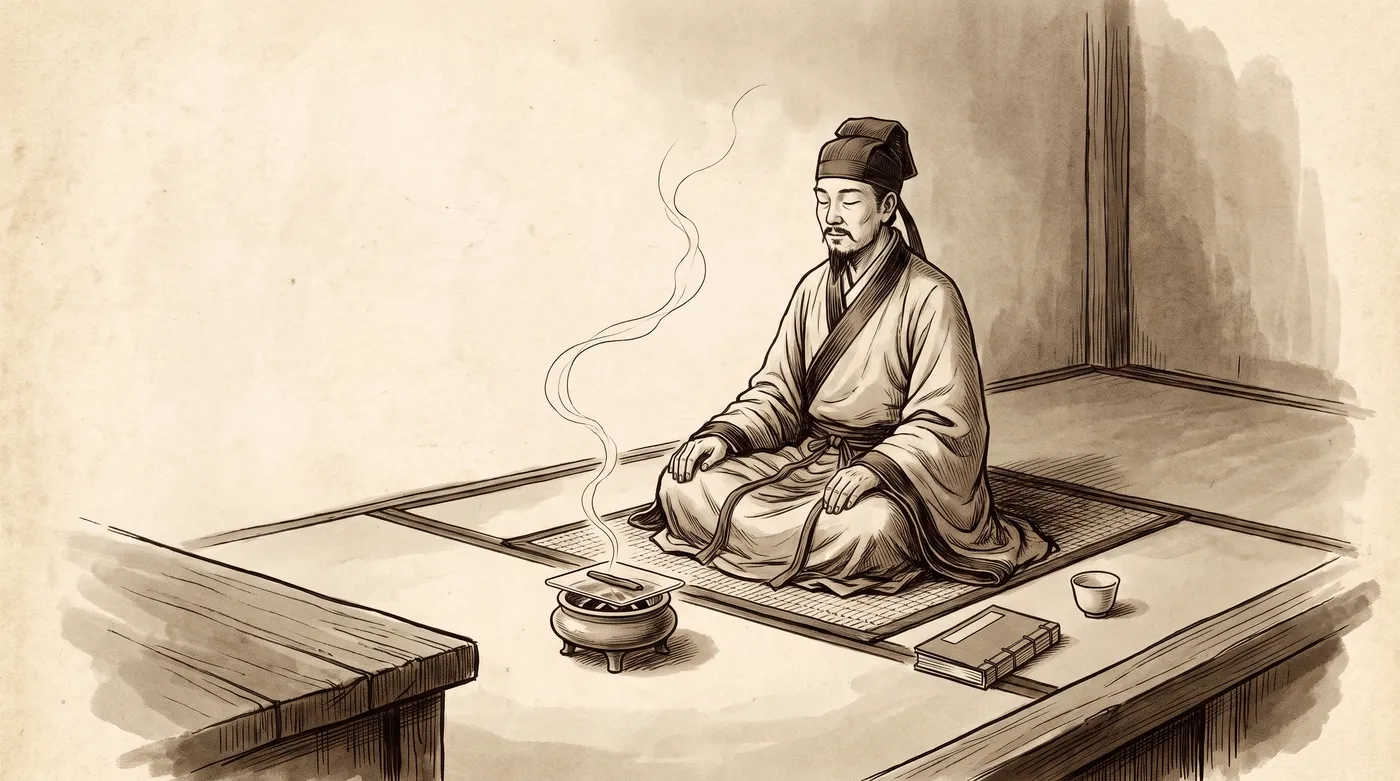
By the Song dynasty, incense had become one of the “Four Arts” of the Chinese scholar — alongside tea, painting, and flower arranging. But Chinese incense culture wasn’t social. It was almost the opposite: a private, meditative practice called 闻香 — literally “listening to incense.”
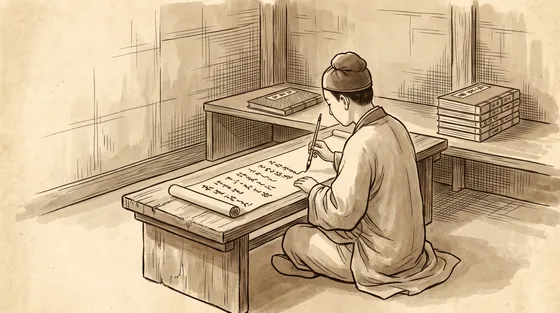
A scholar would place a sliver of agarwood on a mica plate above a carefully buried charcoal ember — indirect heat, no open flame — and simply sit with the scent as it slowly changed over the course of an hour: sweet, then resinous, then musky. Alone, in a study, incense was considered a prerequisite for serious reading — not a mood-setter, a requirement. Entire manuals were written cataloguing blends and rituals, like Chen Jing’s 11th-century Xiang Pu.
Arabia: incense as welcome
In the Gulf, the same prized material — oud, often blended into bakhoor with resins and spices — was never a solitary practice. It was, and still is, the opposite: a communal gesture of hospitality.
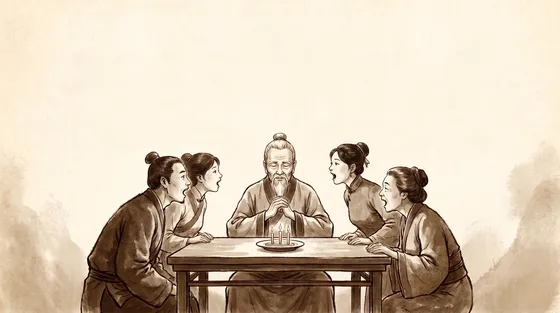
A host burns bakhoor in a mabkhara — a decorative censer — and passes it around the majlis so each guest can wave the fragrant smoke over their clothes and hair before sitting down. It’s offered after coffee, at weddings, at Eid, marking the exact moments China’s tradition sought stillness for: arrivals, transitions, the start of a gathering. The quality of the oud offered was historically read as a direct measure of the host’s generosity.
Same material, opposite use
China: agarwood burned alone, in silence, as a tool for focus and inner stillness.
Arabia: the same wood burned in company, passed hand to hand, as a tool for connection and welcome.
They were never strangers to each other
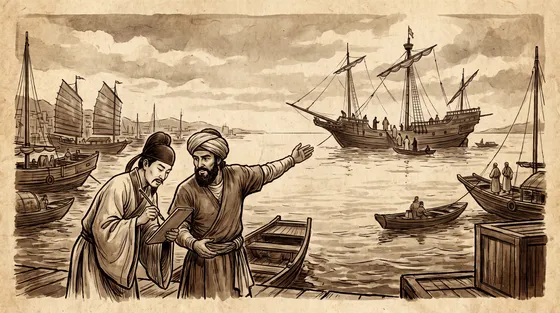
This isn’t just a coincidence of two cultures liking the same tree. The Silk Road and the ancient Incense Route physically connected them — frankincense and myrrh travelled from the Arabian Peninsula into Han dynasty China, arriving alongside Buddhist monks bringing agarwood practices from India. For two thousand years, Arabia and China were trading each other’s incense before either had a name for what the other was doing with it.
Even the tools echo each other without ever touching: China’s Han-dynasty boshanlu, a bronze censer shaped like a mountain peak with smoke curling from its peaks, and Arabia’s mabkhara, an ornate censer built to be passed hand to hand — two civilizations independently deciding that smoke deserved a beautiful vessel to rise from.