 Falafel in Hotpot
Bridge • Issue 13
They wrote Chinese in Arabic letters. For 600 years.
What if I told you there's a version of Chinese written right to left — in the Arabic alphabet?
كتبوا الصينية بحروف عربية. لستمائة عام.
What if I told you there’s a version of Chinese written right to left — in the Arabic alphabet?
I want to show you something most Chinese and Arabic speakers have never imagined. It’s called 小儿经 — Xiao’erjing. Same Mandarin, same words you’d write in 你好 — but written entirely in Arabic letters, right to left. For six hundred years, this was how real communities across China read and wrote their own language.
Where it came from
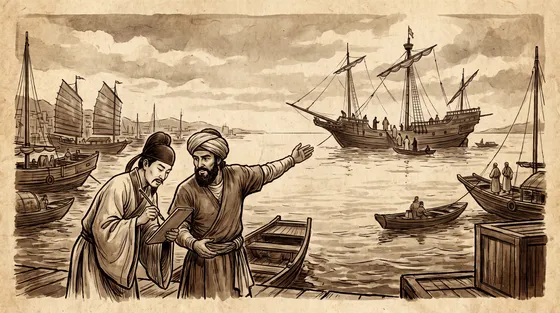
It belongs to the Hui people — 回族, descendants of Arab and Persian traders who settled in China from the Tang dynasty onward and became fully Chinese in daily life, while staying Muslim. Their children studied classical Arabic to read the Quran in mosque schools, 经堂教育, but rarely learned Hanzi. So they could read scripture fluently, yet couldn’t write down the language they spoke every day.
The name itself
小儿经 is usually read as “children’s script.” A lovelier theory ties it to a homophone, 消经 — xiāo jīng — “to digest the scriptures.” A script born to help you absorb what you were studying.
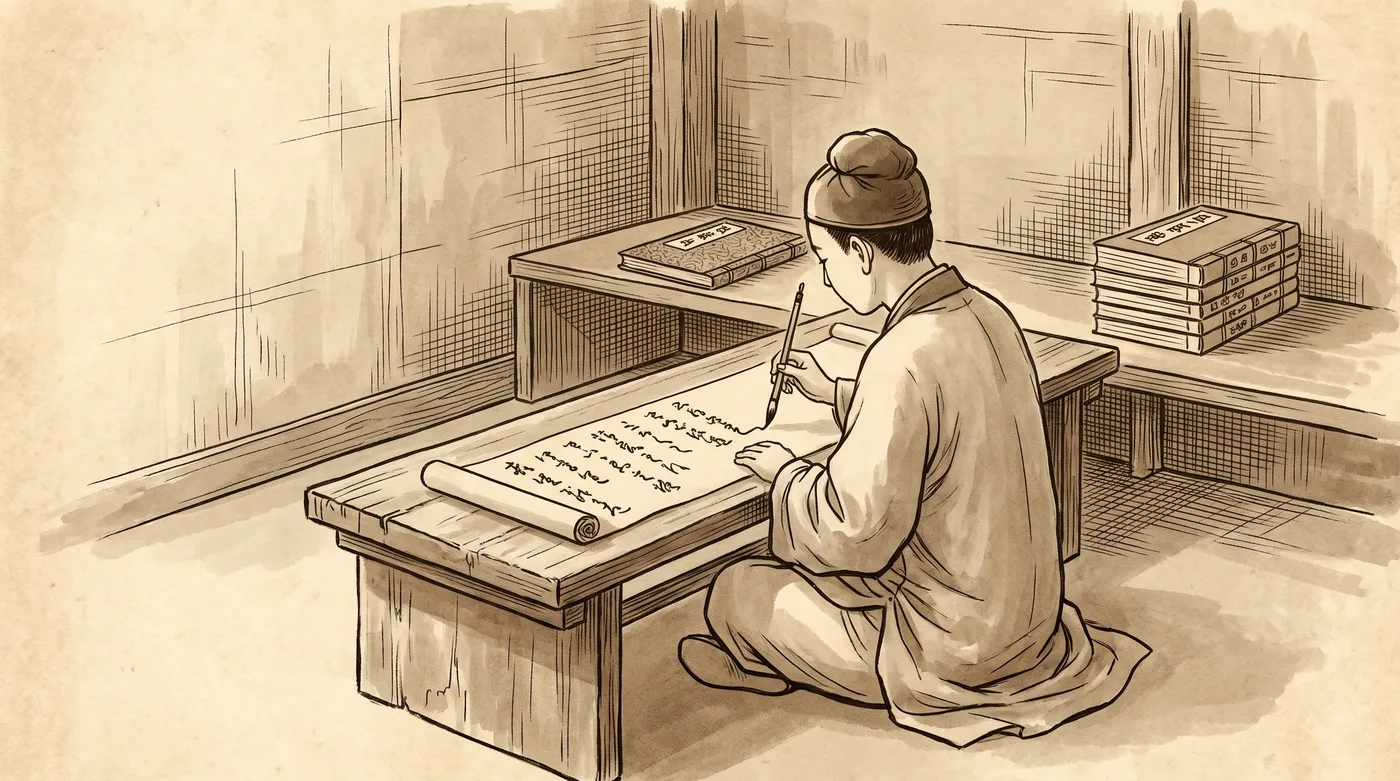
So they took the alphabet they already knew — built for religious study — and pointed it at their own spoken language. Not commissioned by an emperor. Built by children who needed a way to write home.
A phonetic system, much like pinyin — but personal and regional, often legible only to the writer and the person they wrote to. The oldest confirmed example is a stone stele in Xi’an, dated to 1339. It thrived in China’s northwest, and travelled — to the Dongxiang and Salar peoples, and even to Chinese-speaking Muslims in Central Asia, whose descendants, the Dungan, used it before switching to Cyrillic.
Why it disappeared
Why did it disappear? Nothing dramatic. As Hanzi education reached more of China, and pinyin arrived in the 1950s — standardised, tone-marked — the workaround simply ran out of reasons to exist.